




Rhythm in Recovery
June 24, 2026
When people hear of music therapy, they may not associate it with addiction recovery. However, it has proven to be a powerful and effective modality for those on that journey.
To fully understand why it can be so impactful, especially for this demographic, it helps to look at what addiction does to the brain. According to Dr. Pouya Azar, a clinician-scientist in addiction psychiatry, substance use can alter the brain’s reward system, affecting how pleasure, motivation, and emotional regulation are processed.
“If you scan the brain of someone struggling with addiction, you’ll see that it may function and look differently than somebody who doesn’t struggle with addiction,” says Dr Azar. “It’s sort of that pain and reward cycle that people get stuck in when they have severe addiction, where they’re trying to avoid the distress that’s associated with being in withdrawal.”
This cycle doesn’t just affect behaviour – it can also make it difficult for individuals to process and communicate their emotions. For many in recovery, opening up through traditional talk-based approaches can feel overwhelming or inaccessible.
Music therapists and healthcare providers alike see this firsthand in their work with clients in recovery.
“If all emotions are a wave, in addiction we’re stopping the flow and we’re pushing down and suppressing that. That’s what causes us to end up with addiction and mental health issues in the first place,” says Rebecca Barr, music therapist at Charlford House Society for Women addiction recovery program.
She explains that music can help reintroduce that flow in a safer way. “Music just provides the safety to ride the waves of emotions without picking up a substance.”
This is where music therapy can play a unique role. For some individuals, this creative process opens doors that might otherwise remain closed.
“Some people need another layer, a different modality to reach some of the stuff that is protected inside of themselves,” Barr says. “Music has this phenomenal way of helping people access that.”
By offering a non-verbal and creative outlet, it creates a space where individuals can begin to express and explore emotions in a way that feels safer and more manageable.
“This particular population may not be amenable to sitting down with me as a therapist and talking about their background or issues,” says Dr. Azar. “But music is interesting because it almost accesses a different part of the brain, and is using a medium that they’re comfortable with.”
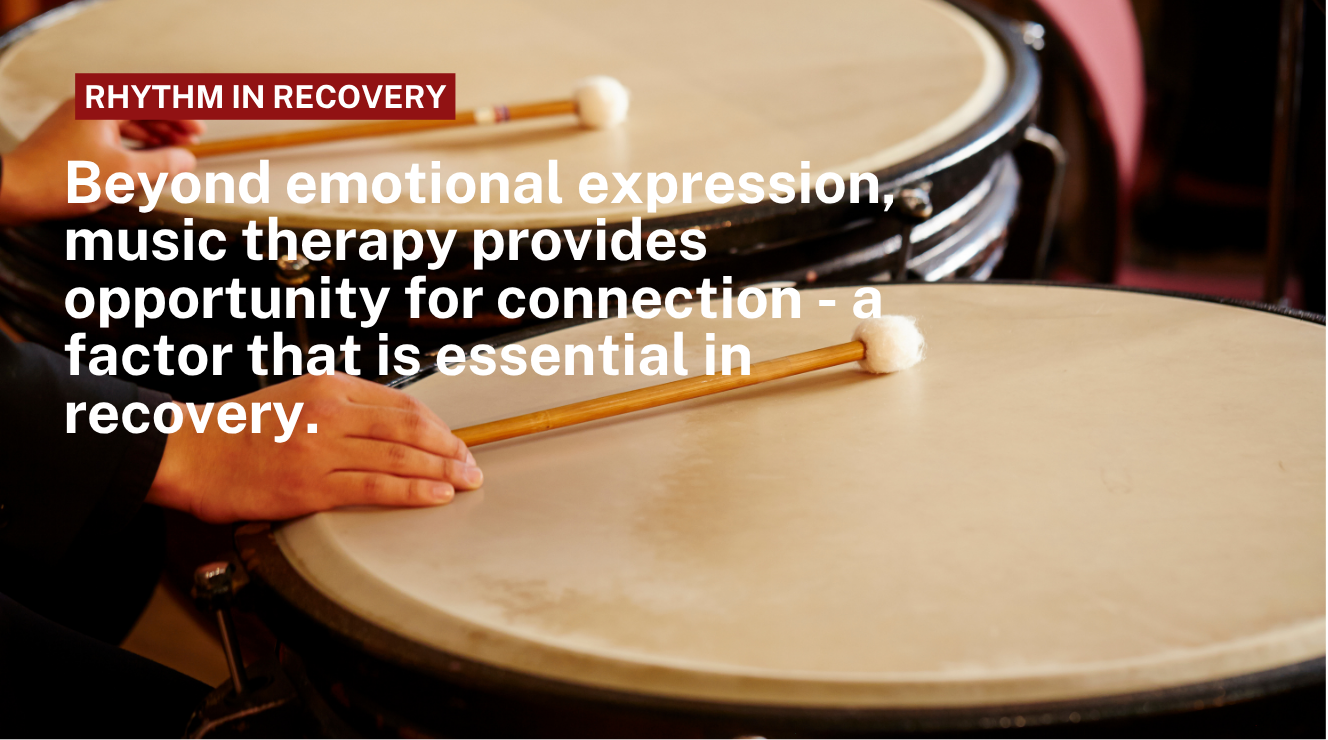
Beyond emotional expression, music therapy provides opportunity for connection – a factor that is essential in recovery.
“In the AA and NA rooms, they talk about how connection is the antidote to addiction,” says Rebecca. “When we join in melody or rhythm, we’re connected to one another. Music unites everybody.”
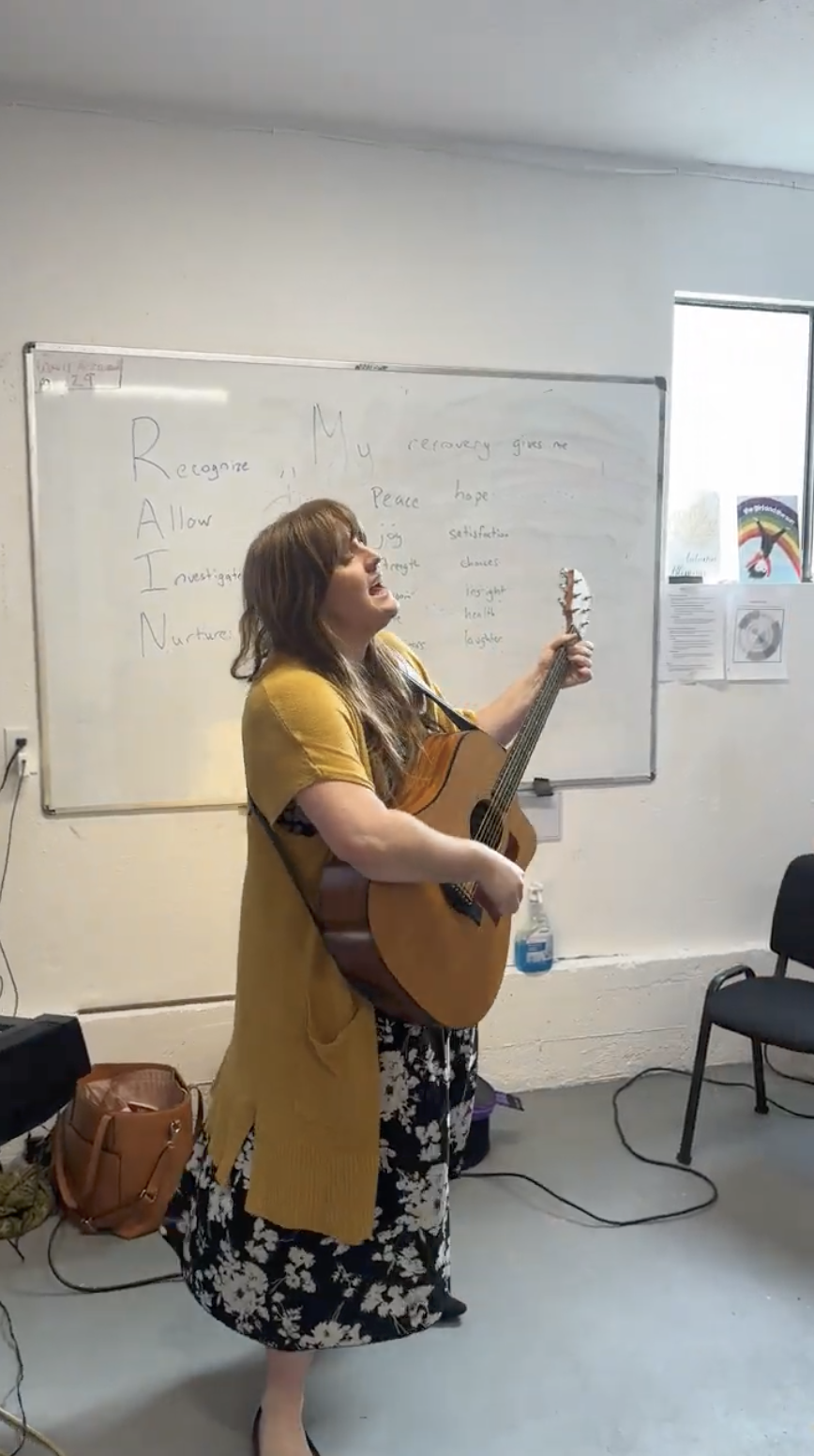
Rebecca Barr, Music Therapist
That sense of connection, combined with music’s ability to engage different areas of the brain, is what makes it such a compelling tool in addiction treatment.
While clinicians are increasingly recognizing its benefits, music therapy remains underutilized. Although there is growing quantitative research supporting its use, it is still considered an under-researched modality in many clinical settings.
“We have an extremely vulnerable patient population that needs care, and we often only have a few points of intervention,” says Dr. Azar. “But if we have this other intervention – music therapy – that is effective for traumatized populations, and it’s not utilized, then we’re failing our patients.”
Through its funding of music therapy programs, Music Heals helps bring this powerful modality to individuals navigating addiction recovery during some of life’s most vulnerable moments. From specialized women’s recovery spaces like the Heartwood Centre for Women at BC Women’s Hospital, Charlford House, Chrysalis Society’s New Dawn Home, and Westminster House, to broader treatment and recovery communities such as Pacifica Treatment Centre, Phoenix House, and the Northstar and Main Centre Programs at Together We Can, music is playing a poignant role in creating safer spaces for healing, emotional expression, and connection.
By supporting these diverse programs, Music Heals expands access to care that complements traditional treatment and helps foster meaningful, more supportive paths toward recovery.
Blog Article Written by: Orchid Solang, BCIT Journalism Intern