




How Music Therapy Fills the Gaps in Healthcare
July 8, 2026
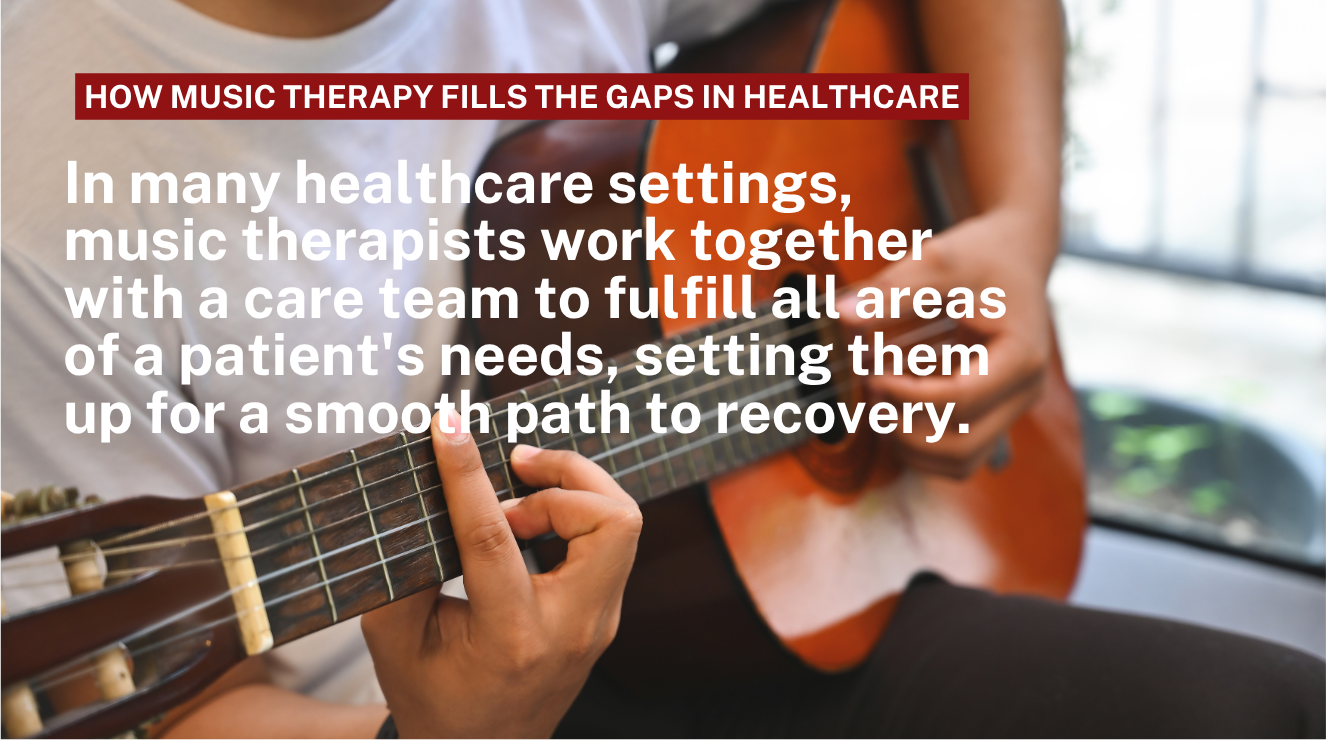
Healing – whether physical, emotional, or mental – is rarely one-dimensional. For many people, music therapy can become a vital part of recovery, helping bridge the gaps traditional healthcare doesn’t always reach. In many healthcare settings, music therapists work together with a care team to fulfill all areas of a patient’s needs, setting them up for a smooth path to recovery.
“It’s really nice to be a part of a team and work together to address our residents, get them involved and meet them where they’re at.” – Aisling Ryan-Aylward, Certified Music Therapist
“I like to think to myself, ‘How does music therapy fill the gaps of what your team is already succeeding in and approach our residents as a team?’” says Aisling Ryan-Aylward, music therapist at Dufferin Place and Kiwanis Lodge nursing homes.
For many individuals in hospital or care settings, mental health can be just as much of a struggle as their physical health. Music therapy can provide additional coping strategies that work alongside medication and other forms of treatment.
“A lot of patients wouldn’t consider themselves musicians or musical people, but they’re coming from backgrounds where they’re struggling with maybe a new mental health diagnosis, or maybe they’ve had a mental illness for quite some time now,” says Kayla Turnbull, music therapist at Kelowna General Hospital
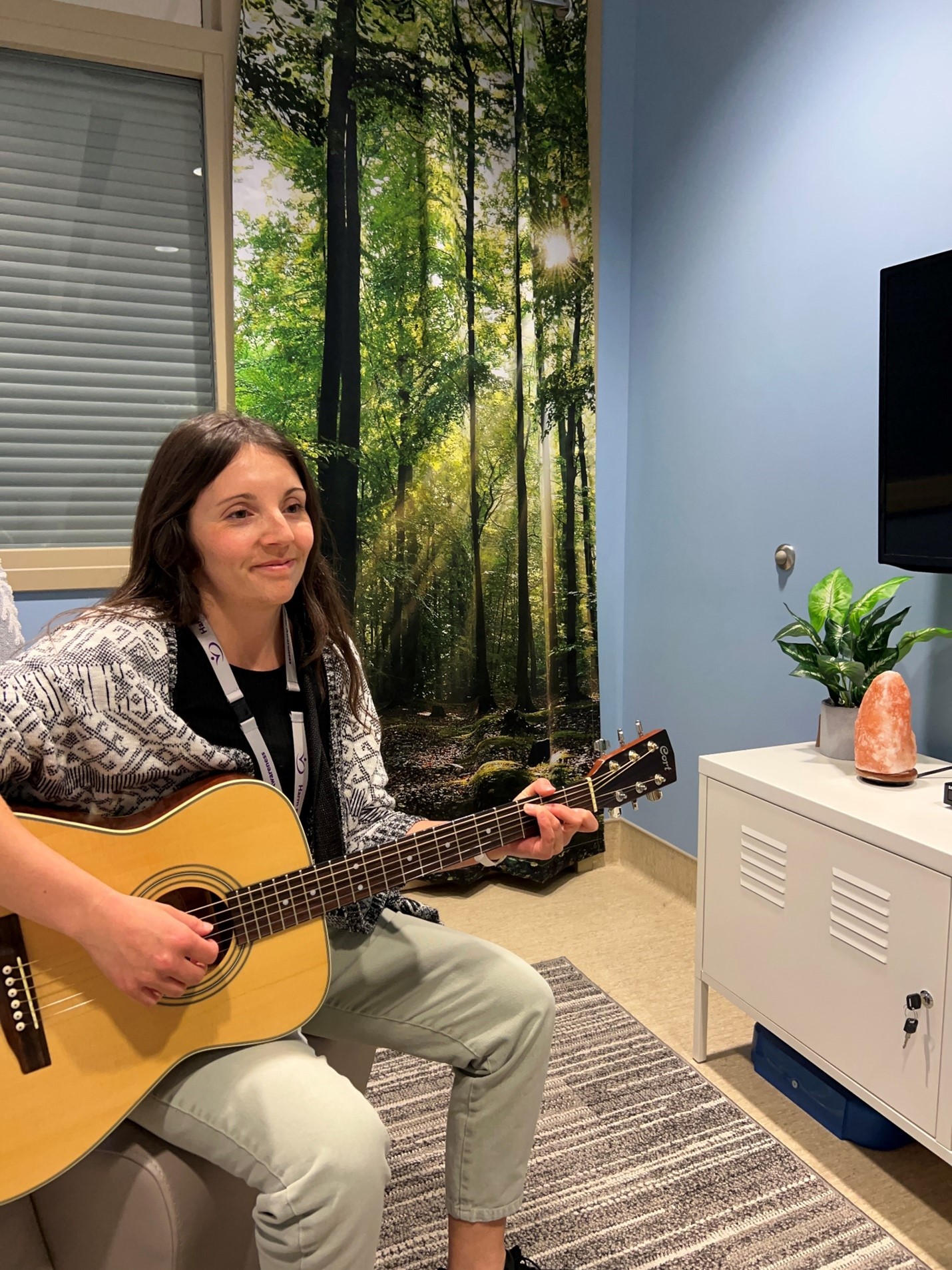 Kayla Turnbull, Music Therapist at Kelowna General Hospital
Working with patients in the hospital’s psychiatry unit, she supports her clients with self regulation and self expression through playing music and song discussion. “They’re just looking for some various coping strategies to go along with their medications.”
A key part of music therapy’s impact on mental wellness is the autonomy it can offer patients. Because sessions are tailored to each individual’s needs, therapists often build treatment plans collaboratively with their clients – creating space for personal choice and self-expression.
“I think choice is a very big thing,” says Edwina Lin, a music therapist working with people with developmental disabilities at the Strive Centre. “It really enables a client to feel empowered – like, ‘I may not be able to move my body’ or ‘I may not be able to think as fast as before, but I still get to choose what I want to do.’”
Because of this, Edwina always offers options in her group sessions, and works closely with hd For patients who otherwise may not have much agency in their day-to-day lives, this sense of empowerment can be profound.
Music therapy can also reshape how patients see their caretakers and healthcare providers, creating opportunities for connection outside of clinical routines. For Eva Wong, music therapist at Mount St. Joseph’s Hospital, these sessions give the broader care team a chance to step outside of their traditional roles and engage with patients on a more personal level.
“The nurses and care aides sometimes come in to engage with patients during the program,” says Eva.
“[Music therapy] is a space for the patients and residents to see their care team in a different light – they’re not just here to change me or give me my meds, they actually have a human side. They’re having fun and dancing.” – Eva Wong, Certified Music Therapist
Alongside patient relationships with their care team, sessions can also strengthen bonds with family, offering moments of connection during difficult healthcare experiences.
“Families of patients can also be involved in the session as they really are a resource,” says Eva. “We can ask them if their family member has any favourite songs, and that time can create moments that they get to share together.”
Beyond connections and emotional support, music therapy has the ability to improve practical outcomes by building trust, motivation, and cooperation.
“I’ve had nurses come to me because a resident wouldn’t take their medication,” Eva says. “So I would go and sit with this person for 10 minutes to get them in a better mood, and afterwards they’re more willing to take their meds.”
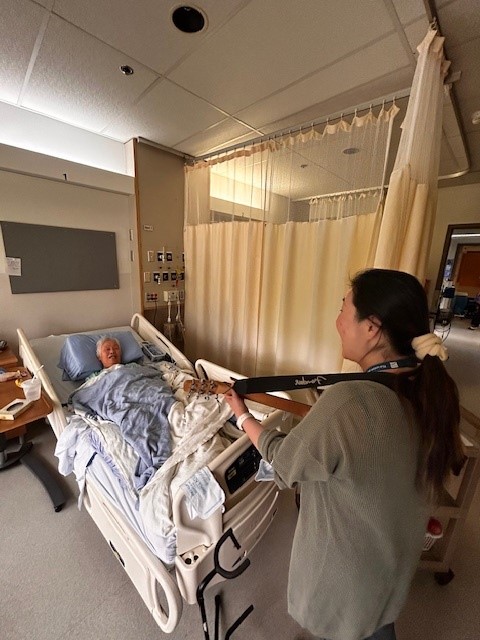 Eva Wong, Music Therapist at Mount Saint Joseph
In rehabilitation settings, that same connection can help encourage participation in exercises or treatment plans. “For some in acute care in our geri-med, a lot of the time we’re focusing on rehab, wanting to get them to their exercises so that they can be discharged,” says Eva. “Some of them are like, ‘Nope, not today’. But then I go in, I get them talking, connect with them on a personal level, and afterwards they’re more willing to do it. So [music therapy] can have that reactivation as well.”
From mental health support to rehabilitation, relationship-building, and family connection, music therapy often fills the spaces traditional healthcare can leave behind. By working alongside care teams, music therapists help create more pathways to healing – ones that support not just physical outcomes, but the emotional and human experiences that shape recovery.
Blog Article Written by: Orchid Solang, BCIT Journalism Intern