




BCIT Students Create Documentary Exploring Music Therapy in Addiction Recovery
May 6, 2026
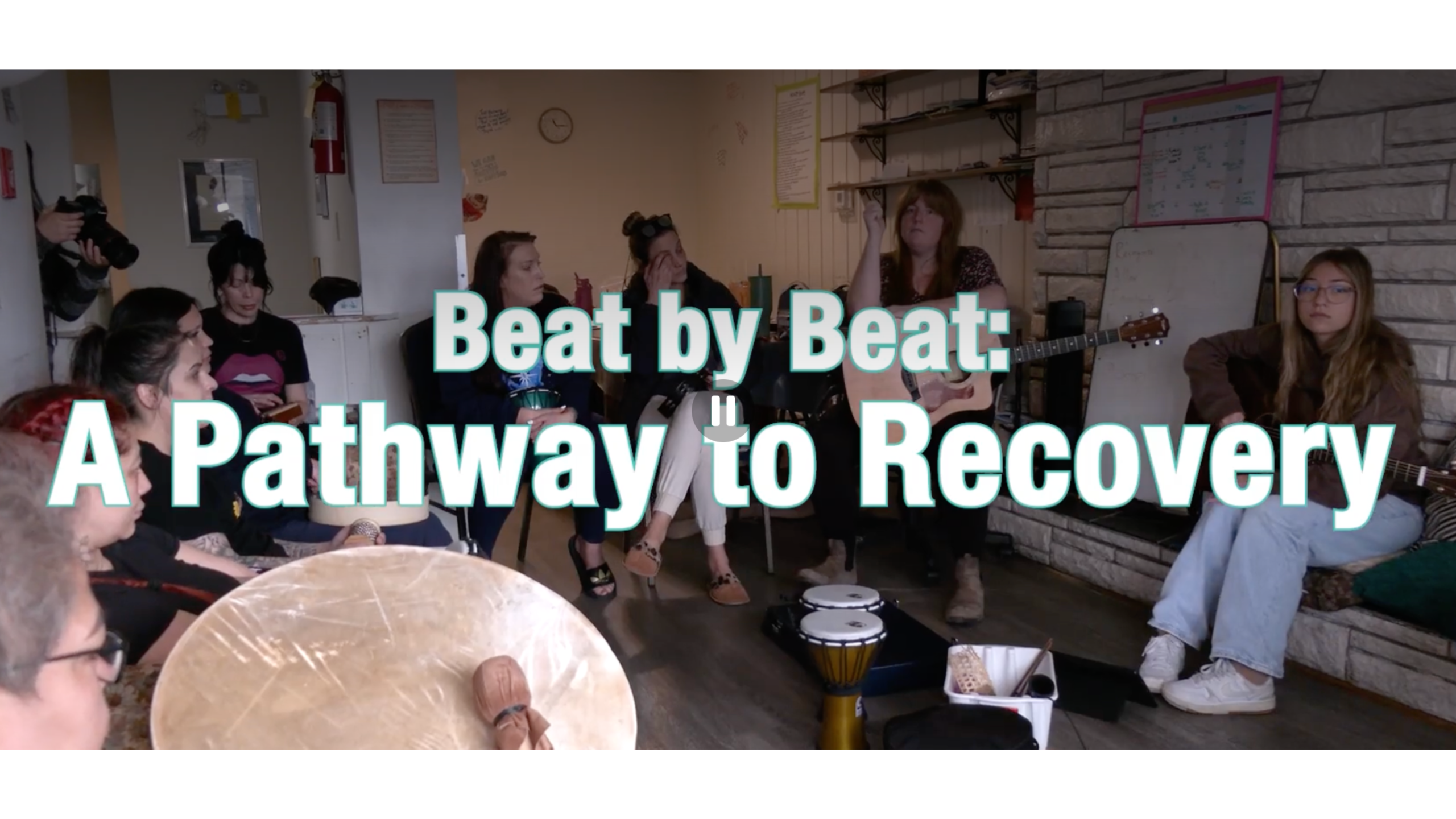
In a cosy living room at Charlford House Society for Women, music becomes more than sound – it becomes a tool for reflection, connection, and recovery. This is the world explored in “Beat by Beat: A Path to Recovery”, a documentary created by a group of students from the British Columbia Institute of Technology (BCIT), examining the role of music therapy in addiction recovery.
The short documentary follows a music therapist and her clients at Charlford House Society for Women, highlighting how music can support emotional expression, processing, and healing in the recovery journey.
The project was created by BCIT students Orchid Solang, Ayden Singh, Braeden Coombes and Thomas Adams as part of their final capstone project for the Broadcast Journalism program. The idea first took shape in early March, following Orchid’s internship with Music Heals Charitable Organization the month prior.
“Music Heals just felt like a perfect fit for me and my interests, and it was my top choice going into our internship rotation,” says Orchid, producer of the documentary.
During her time there, Orchid was able to develop a deeper understanding of music therapy through interviews with a variety of certified music therapists. “I’ve always said music is my therapy but I never knew about the scope of therapeutic practices that were being used to help people, and in so many different populations too.”
Inspired by her experience with the charity, she pitched the concept of exploring music therapy to her team – a direction they quickly agreed to pursue.
The idea, however, didn’t come without its hurdles. The group initially planned to document a program for children with developmental disabilities, but due to scheduling and consent challenges, they pivoted their focus to women in recovery at Charlford House. As they moved into pre-production, the team shared a clear and unified vision for how they wanted to tell the story.
“Our approach to the story from the get-go was to tell the stories of our two main characters and their journey overcoming addiction,” says Braeden, one of the two videographers and editors of the documentary. “We didn’t want to focus solely on music therapy – we wanted to shed light on real stories, highlighting their recovery and deep connection with music.”
The shift in direction ultimately shaped the tone and focus of the documentary, placing it within the context of addiction recovery and women’s healing journeys – a process the team knew would require balancing ethical considerations with the responsibility of accurately representing participants’ experiences.
“We knew we’d have to approach with more sensitivity, and that it was critical to be cognizant of their struggle,” says Ayden, co-videographer and editor. “It meant a lot to them, and we had to find a way to explore those emotions while ensuring they remain comfortable while being vulnerable.”
Through observing the music therapy sessions and connecting with the participants, the team began to see firsthand how music can create space for expression that is not always attainable through words alone.
“Being in the sessions was truly inspiring,” says Thomas, the project’s photographer. “All you’re able to do is focus on the sounds of healing – it’s a very communal experience.”
Through the generosity and trust of the staff and residents at Charlford House, the team was welcomed into both group and one-on-one sessions, where they got to know the women of the house and their diverse experiences.
“Some women were multiple months into their recovery from addiction, while others were only just starting,” says Braeden. “I think having different people at different stages of their recovery at the house really encourages everyone to put their best foot forward.”

For the BCIT students, Beat by Beat: A Path to Recovery became more than a capstone project – it became an opportunity to witness the role music can play in healing, connection, and recovery. Through documenting these women’s stories, the students gained a deeper understanding not only of music therapy, but of the courage it takes to heal.
The team hopes the documentary will offer viewers a broader perspective on addiction and recovery, and encourages audiences to look beyond traditional perceptions of therapy, recognizing music as a powerful tool for self-expression, emotional processing, and transformation.
“I hope people come away understanding that healing can look different for everyone and that everyone is on their own journey,” says Orchid. “For a lot of people, music is a bridge – a way to reconnect with themselves, move forward and transform.”
Click here to watch the documentary and explore the team’s accompanying website, where you can learn more about the music therapy at Charlford House.
–
By sharing stories like these, Music Heals continues to raise awareness for the many ways music therapy supports individuals in addiction recovery and other diverse communities.
Click here to explore the wide range of music therapy programs Music Heals helps make possible.