




When memory fades, music remains: How music therapy is helping seniors reconnect with themselves
February 23, 2026
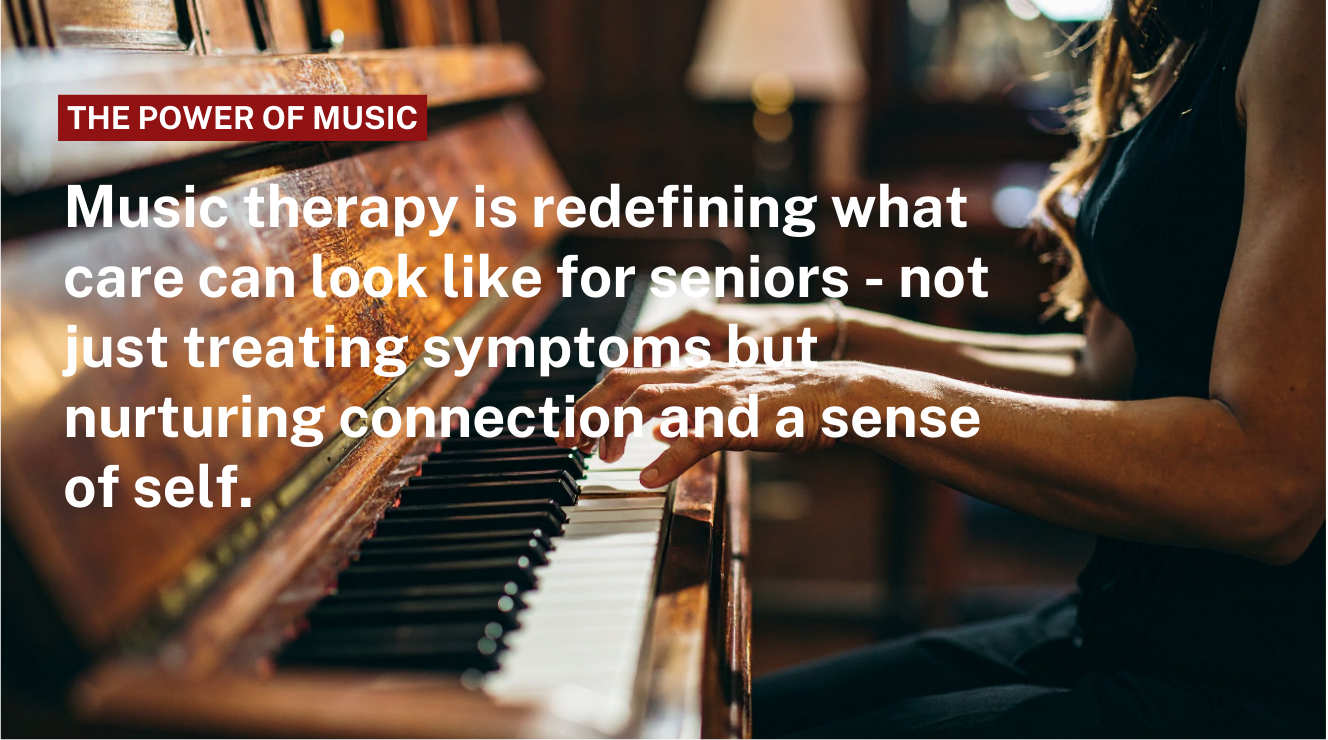
In between the walls of a senior home, an elderly patient sits quietly – her body tense and her gaze distant. Then, within moments of hearing a familiar tune, something shifts. Her shoulders soften. Her face relaxes into a gentle smile.
“One time I sat with a patient and within two minutes of playing a song, you could just see her shoulders melting,” says Eva Wong, music therapist at Vancouver’s Mount St. Joseph’s hospital. “Her facial expression relaxed and she began making eye contact.”
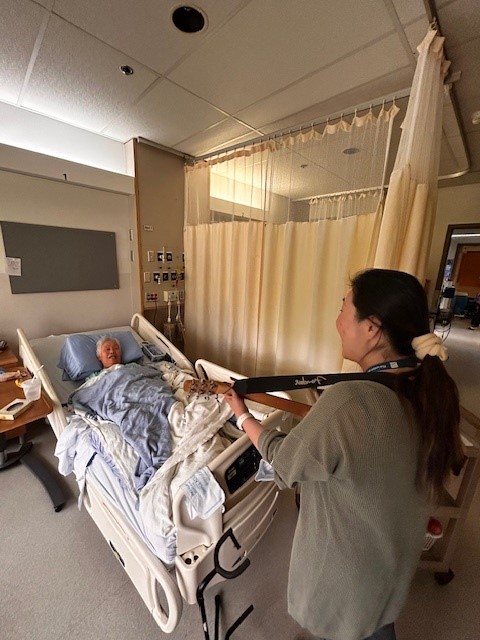
Music Therapy Participant & Music Therapist Eva Wong (Mount St. Joseph’s Hospital)
In long-term care settings, where many residents can live with dementia, stroke, or cognitive decline, moments like these can be rare – but music therapy is helping create space for them.
Through playing instruments, listening to familiar songs, and guided discussion, music therapists help seniors and older adults access memories, express emotions, and experience moments of calm and happiness – improving quality of life in ways that extend beyond traditional care.
What challenges do seniors face that music therapy can help with?
One of the most prevalent struggles found in seniors is dementia, a syndrome that can cause many cognitive and psychological changes.
- Dementia: a decline in mental function such as memory, problem-solving, and thinking that interferes with daily life. The most common cause of dementia is Alzheimer’s disease, but it can be caused by other diseases as well.
Many who suffer with dementia experience confusion, anxiety, agitation, and restlessness that especially increases with sundowning.
- Sundowning: a phenomenon common in people with dementia or Alzheimer’s where confusion, anxiety, and agitation increase in the late afternoon and early evening.
According to Eva, hopelessness, boredom, and helplessness are generally the three key targets for music therapy in seniors. These empty feelings can both lead to and stem from social isolation and a lack of human connection.
“Social isolation can become quite apparent when they’re at the point in their dementia where they’re aware that they’re not well,” explains Aisling Ryan-Aylward, music therapist at Dufferin Place and Kiwanis Lodge, long-term care facilities in Nanaimo. “They tend to isolate themselves in their room because they may be self-conscious, they don’t want to embarrass themselves in some way.”
By creating a low-barrier space for expression without relying on words, music therapy helps seniors reconnect with the world around them, and the parts of themselves that may feel lost.
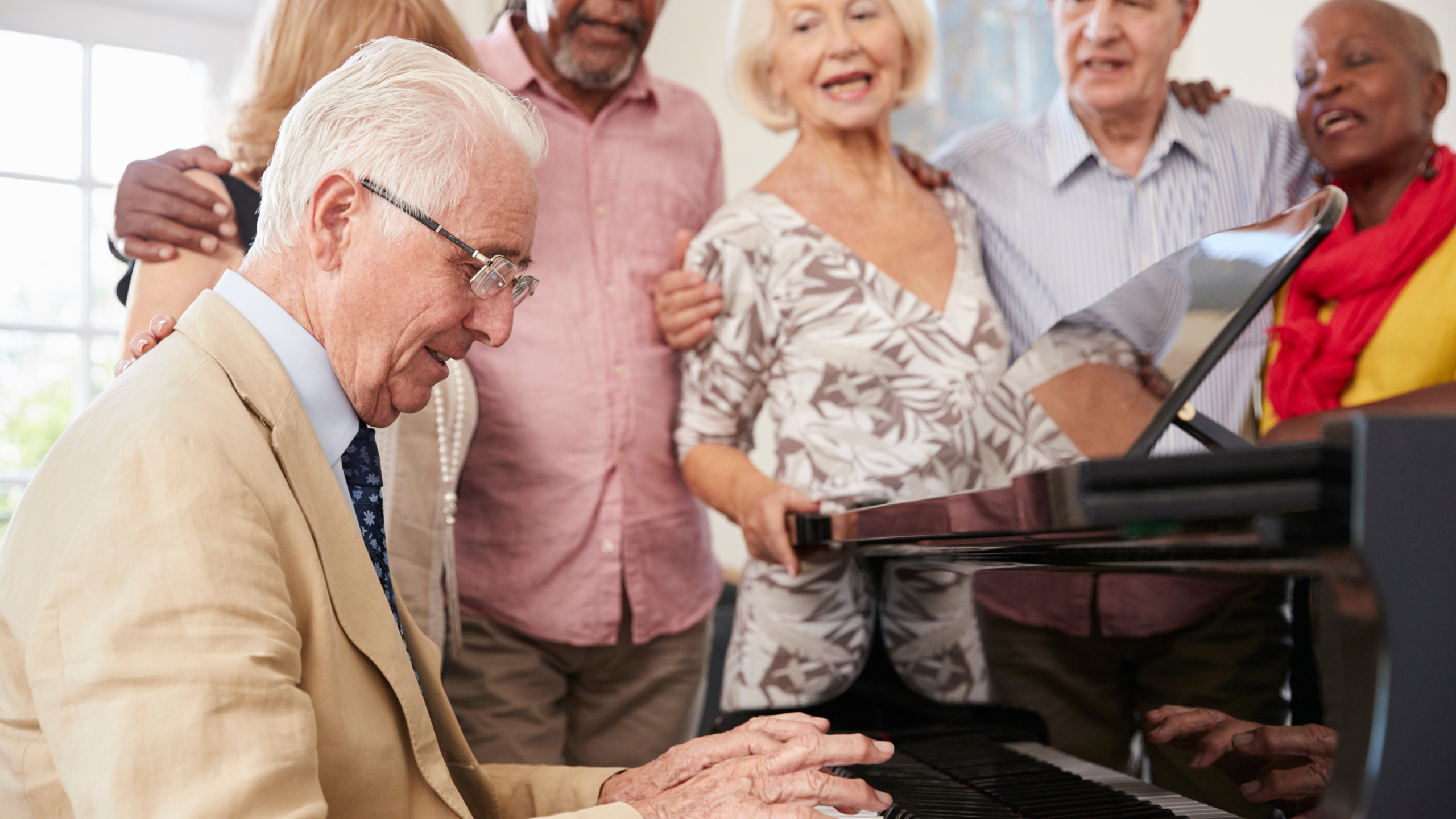
Stock Image
What does music therapy with seniors look like, and how can it help?
While check-ups and medication can help the physical and psychological needs of seniors, music therapy comes in to fill the gaps of a care team, focusing on improving quality of life and emotional well-being.
One method often used in music therapy is creating a rhythm. For the elderly, drums or other percussion instruments are often used as they are very user-friendly.
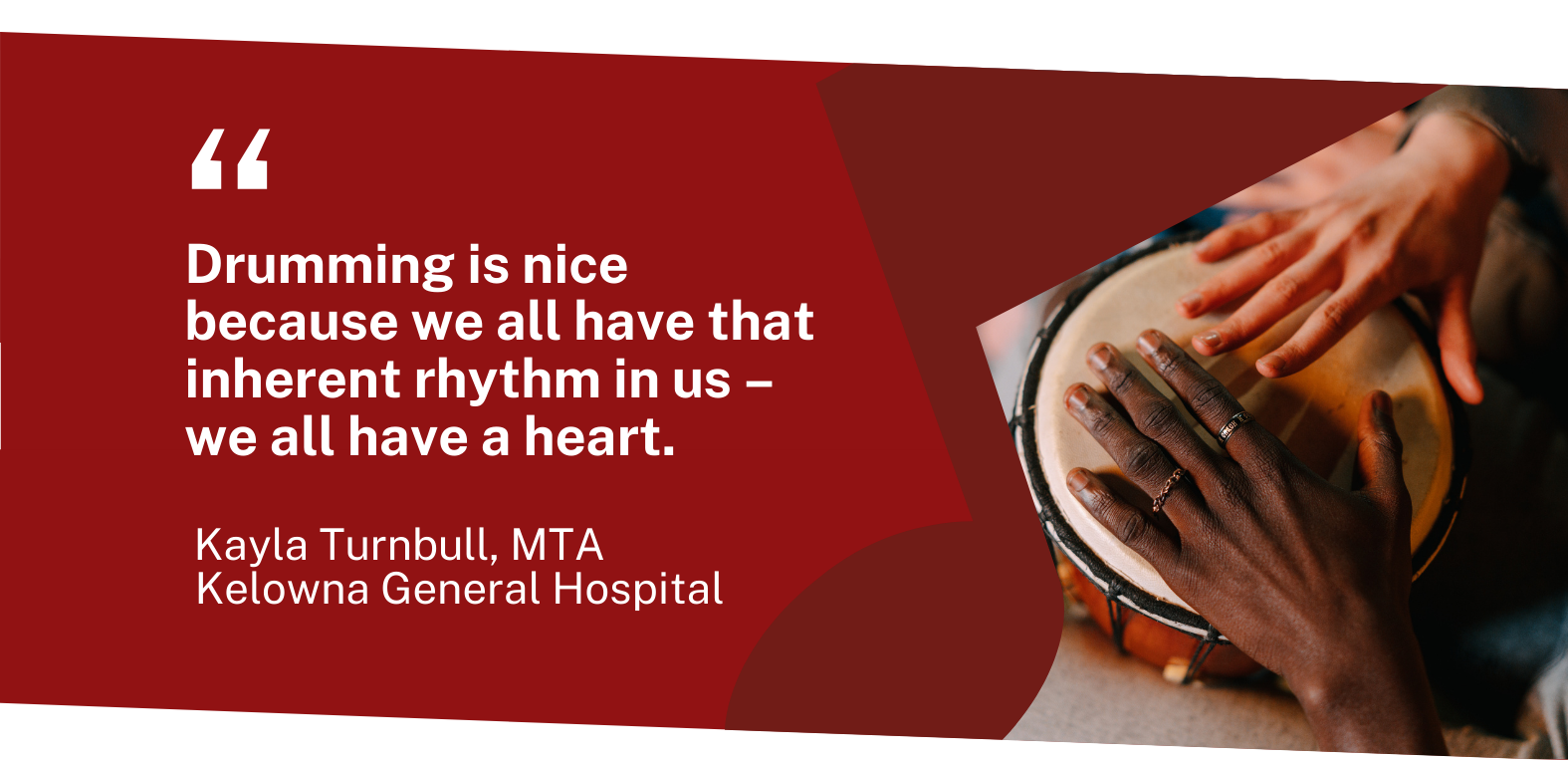
“Drumming is nice because we all have that inherent rhythm in us – we all have a heart,” says Kayla Turnbull, a music therapist at the Kelowna General Hospital who leads a drum group as part of her sessions for the McNair Psychiatric unit, “just being in rhythm together can be so soothing.”
According to neural resonance theory, people can keep time, dance, and effectively improvise music because human biological processes can sync with music, from a basic drum beat to complex melodies.
- Neural resonance theory (NRT) is a scientific framework suggesting that the human brain and body do not just “listen” to music, but actually vibrate in sync with it. Instead of merely predicting musical notes, our neurons physically resonate with the rhythm and harmony, turning sound waves into physical, emotional experiences.
The simple act of staying on beat enables seniors to be actively engaged and can help develop their attention spans, wherever their cognitive abilities lie.
“Music therapists can adjust the activities or the instruments to meet each individual where they’re at, whether they’re still very cognitive and able to do complex drumming, or maybe they’re a bit more progressed in their dementia and it’s more about hand-over-hand,” Aisling explains.
- Hand-over-hand (HOH): a prompting technique where a therapist or caregiver places their hands over their patient’s hands to guide movements and teach certain actions. In music therapy, this can help with activities such as tapping a drum, strumming a guitar, or playing piano keys.
“Improvising on a variety of different instruments or movements can sustain their attention, and they can successfully remain seated, actively engaged, and have changes in facial affect,” she says.
But music therapy doesn’t stop at rhythm and playing instruments; it also works on a deeper cognitive and personal level. Often, the most meaningful moments come from listening – when a familiar tune sparks a memory, or moving lyrics open the door to conversation.
Aisling leads her group music therapy sessions with this in mind. “Groups for more cognitive residents are often more based on discussion. Lyric analysis, sharing moments of their life, and that group connection.”
In a study done by Anglia Ruskin University, music therapy was proven to reduce stress in those struggling with dementia because of its powerful ability to spark memories. Tapping into personal connections to certain songs or a history with music can allow seniors to connect to themselves and others, fostering a sense of identity, self-expression and connection.
Aisling recalls a moment in her session where one song started a moving discussion. “We shared a song, ‘Que Sera Sera’,” she says, going on to explain how the first line of the song is ‘I asked my mother, what will I be?’
“These folks might be in their seventies, eighties, or nineties, and they’re still talking about the importance of their mother and the comfort they provide.” – Aisling Ryan-Aylward, Music Therapist
“The conversation shifts to talking about our mothers,” she goes on. “These folks might be in their seventies, eighties, or nineties, and they’re still talking about the importance of their mother and the comfort they provide. Or how they are now mothers or fathers, and the comfort they provide to their children.”
Music can bring memories to the surface in ways that ordinary conversation cannot, which can aid seniors in their self-expression and identity, and encourage connection with family, peers, and caregivers.
What is the scope of music therapy for seniors in BC?
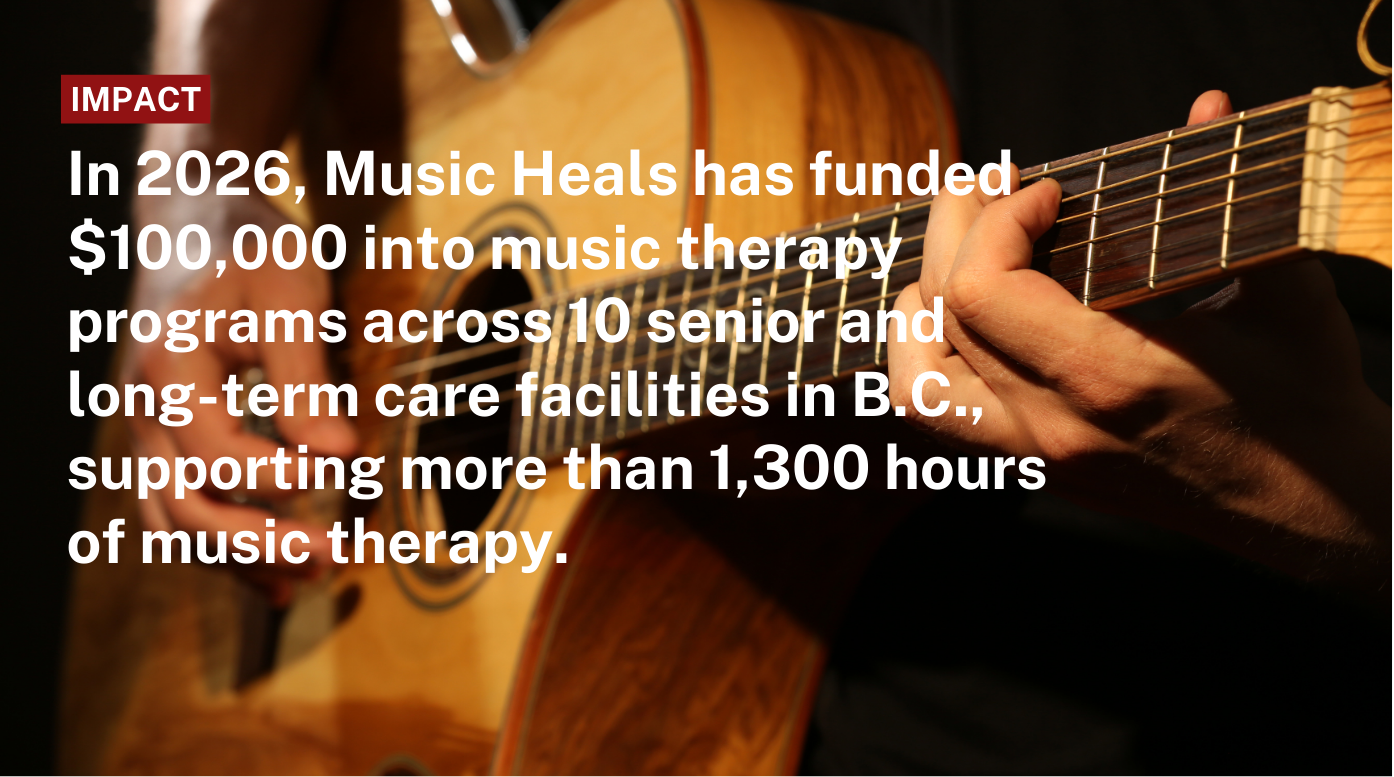
In 2026, Music Heals has funded $100,000 into music therapy programs across 10 senior and long-term care facilities in B.C., supporting more than 1,300 hours of music therapy. But with the demand continuing to rise, therapists say the need is only growing – and for many seniors, these moments of music offer more than therapy.
“It’s not just going through the motions of your day in the hospital. You’re getting your medicine, you’re getting your checkups, but it actually brings some life back to the walls. It’s something that they look forward to.” – Eva Wong, Music Therapist
Music therapy is redefining what care can look like for seniors – not just treating symptoms but nurturing connection and a sense of self. With continued support from Music Heals, more facilities can offer these programs, though the need continues to grow. Even as time reshapes the mind, music endures – carrying the emotions and stories that make us who we are.
Blog Article Written by: Orchid Solang, BCIT Journalism Intern